
Speakers Who Inspire
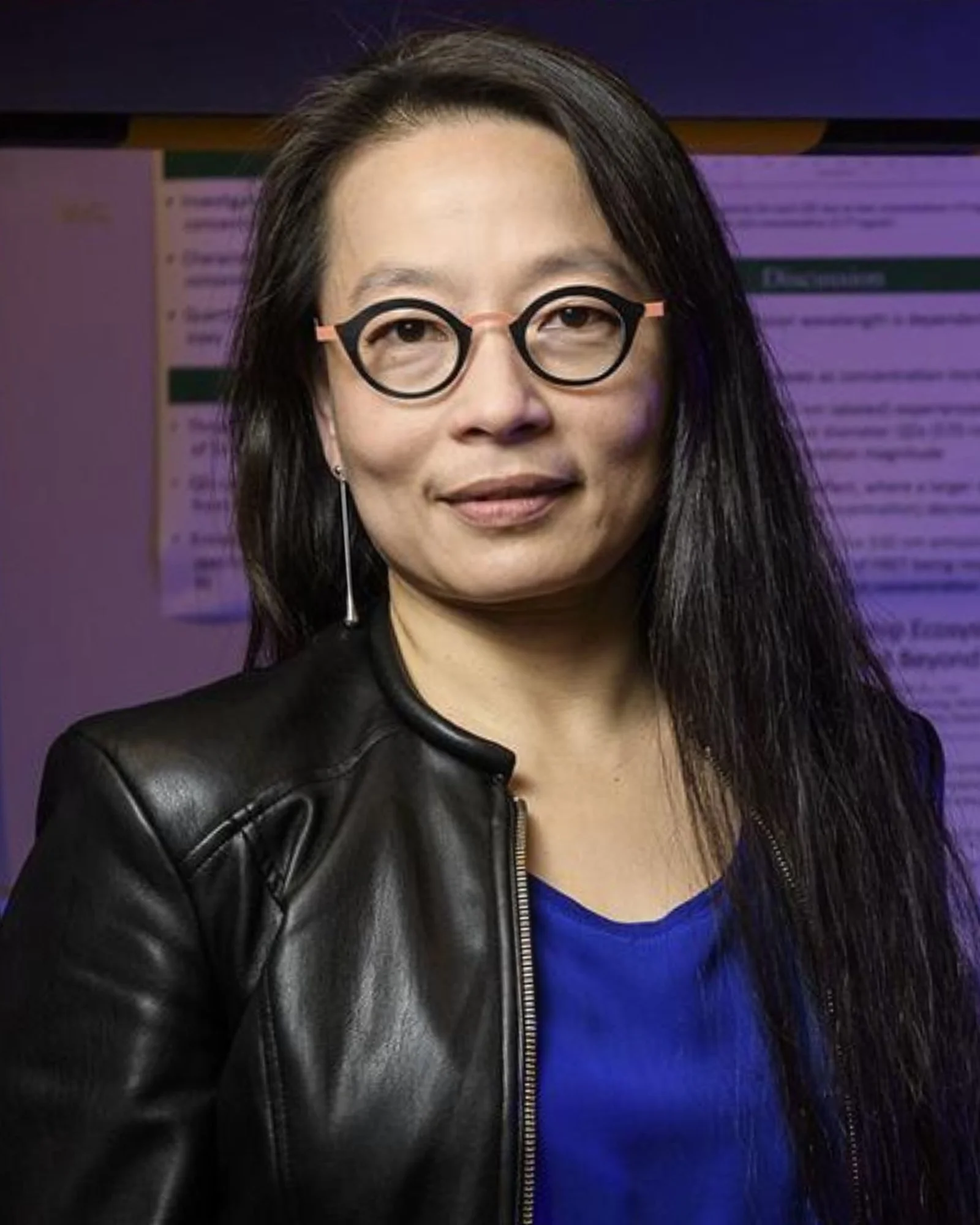
Keynote Speaker
Caroline G.L. Cao
Professor and Dean of Faculty of Engineering
University of Ottawa
Canada
“Human Factors Research in Healthcare”
Caroline G. L. Cao is Dean of Faculty of Engineering at the University of Ottawa in Canada. She received a Ph.D. in mechanical & industrial engineering from the University of Toronto in 2002. Dean Cao is a researcher, educator and entrepreneur with extensive experience in the design and development of medical systems and devices, and enabling technology (AR/VR, simulation and training, decision aid, sensory substitution, navigational aid, robotics, etc.) for minimally invasive surgery and robotic surgery. Prior to joining the University of Ottawa, she was International Chair for Industry of the Future and Professor of Computer Science at IMT Atlantique in Brest, France from 2021 to 2023, where she developed partnerships with industries to address challenges in Industry 4.0 and 5.0 (e.g., digital twins, human-robot interaction, artificial intelligence, XR technology, system resilience). She was Director of Engineering Innovation and Medical Simulation at the Carle Illinois College of Medicine , University of Illinois Urbana-Champagne, from 2023-2025. Dr. Cao is a recipient of the US National Science Foundation Career Award, a US Fulbright Scholar award, and the International Chair of RFI ATLANSTIC 2020 in France. Dr. Cao is an elected Fellow of the Human Factors and Ergonomics Society (HFES), the International Ergonomics Association (IEA), and the American Institute for Medical and Biological Engineering (AIMBE). She is Associate Editor of the journal Human Factors. Dr. Cao is currently President of the Human Factors and Ergonomics Society.
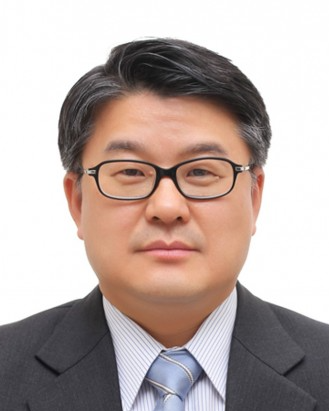
Keynote Speaker
Myung Hwan Yun
Professor and the Director of of Human Interface Systems Laboratory at the Department of Industrial EngineeringSeoul National UniversitySouth Korea“Intelligentizing Human Factors for Digital Healthcare Innovation : Designing for Symbiosis”
Myung Hwan Yun is a Professor and the Director of Human Interface Systems Laboratory at the Department of Industrial Engineering, Seoul National University, Seoul, South Korea. He is also a former president of the Ergonomics Society of Korea and was the Organizing Chair for IEA (International Ergonomics Association)’s triennial conference, the IEA 2024 JEJU. He is also a Fellow of IEA, ACED and ESK.
He received his B.S. and M.S. in industrial engineering from Seoul National University, Seoul, South Korea and a PhD in industrial and manufacturing engineering from Penn State University, USA. His research interests include Human Interface Design, User Experience Research, Affective Product Development and Auditory User Interface.
Professor Yun spent most of his career advising and co-operating with major product/service developers in South Korea including Samsung Electronics (Mobile Products, Home Appliances), Hyundai Motors (Interior Trim, Perceived Quality, Sound Design, Driver Seat) and Hana Financial Group (User Experience, Customer Journey Planning)
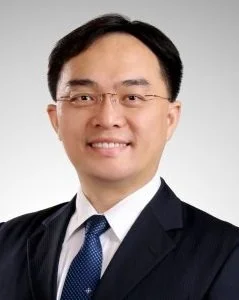
Keynote Speaker
Shao-Jen Weng
Chairman of Healthcare Systems ConsortiumTaiwan
“The Evolution of the Healthcare Systems Consortium (HSC): Pioneering Digital Healthcare in Taiwan”
Dr. Shao-Jen Weng is a Professor in the Department of Industrial Engineering and Enterprise Information at Tunghai University, where he also serves as the Chairman of the Healthcare Systems Consortium. He earned his Ph.D. in Industrial Engineering from Arizona State University, specializing in the application of advanced computational modeling and optimization within complex healthcare service systems.
His primary research interests reside at the intersection of Operations Research, Discrete-Event Simulation (DES), and Lean Healthcare. Dr. Weng’s scholarly work focuses on developing robust simulation frameworks to enhance operational efficiency and patient safety in high-acuity clinical environments. By integrating Lean Six Sigma methodologies with stochastic modeling, his research provides data-driven solutions for resource allocation, outpatient scheduling, and emergency department throughput optimization.
Throughout his academic tenure, Dr. Weng has spearheaded numerous interdisciplinary projects in collaboration with leading medical centers in Taiwan. His contributions to the field are documented in peer-reviewed journals such as Health Care Management Science, the International Journal of Production Research, and the Journal of Medical Systems. His research not only addresses theoretical gaps in industrial engineering but also offers practical, scalable implementations for healthcare administrators facing increasing systemic volatility.
In addition to his research portfolio, Dr. Weng is a dedicated educator and a senior member of several professional engineering societies. He frequently serves as a technical consultant for healthcare digital transformation initiatives, advocating for the integration of Artificial Intelligence and Digital Twin technology in hospital management. His current work explores the synergy between simulation-based decision support systems and real-time data analytics to foster more resilient healthcare infrastructures.
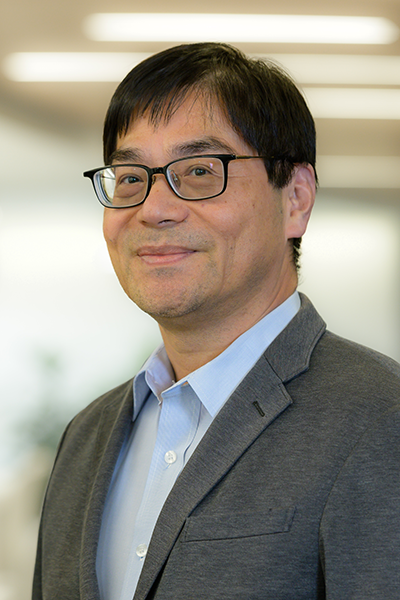
CRITICS (Panel Discussion)
Yang C. Fann
WORK EXPERIENCE (SELECTED):
2026 – Present: Director, Taiwan Digital Health Institute (TDHI), China Medical University Hospital, Taiwan
2026 – Present: Professor, Dept of Biomedical Science, School of Medicine, China Medical University, Taiwan
2021 – 2026: Director, Clinical Informatics, Office of Intramural Research, Office of the Director, National Institutes of Health, Bethesda, MD, USA
2024 – 2026: NIH AI Task Force, Office of Intramural Research, Office of the Director, NIH
2024 – 2026: NIH Health AI Committee, Office of Intramural Research, Office of the Director, NIH
EDUCATION:
Research Associates (Comp. Biology) | Washington Univ. in St. Louis, MO | 1995 - 1996
Postdoc (Protein Structure/Biochem.) | Northwestern University, Evanston, IL | 1992 - 1995
Ph.D. (Computational Chemistry) | Temple University, Philadelphia, PA | 1988 - 1992
B.S. (Chemistry) | Tamkang University, Taipei, Taiwan | 1980 - 1984
PROFESSIONAL COMPUTER SKILL:
Programming Language: Visual C++, VB, Java/JSP, XML/JSON, FORTRAN, Bio/Perl, and SQL.
Operating System: Redhat Linux, Mac OSX, Windows OS.
Bioinformatics: RNA-seq, WGS and Single Cell Sequencing Analysis, Integrative Computational Biology, Microarray and Proteomics (MS) Analysis, Pathway Studio, CLCBio, GenSpring, VectorNTI, SAS/JMP, EMBOSS, SWISSPROT, NCBI Tools.
Databases: MS Access, FileMaker Pro, MS SQL, MySQL, and Oracle
Computation & Modeling: Sybyl, MacroModel, UNITY, DISCO, MatchMaker, Composer, QSAR, DOCK, CoMFA, TRIAD, TINKER, AMBER, QUANTA/CHARMm, MSI/InsightII, ISISDraw, WebLab, Swiss PDB viewer, Alchemy2000, GAMESS, Gaussian9x, Spatan, MOPAC, EHMACC, etc.
Biomedical Engineering: Equipment/Computer interfaces, Digital/analog conversion with PC data acquisition, LabView interfaces.
Director of Taiwan Digital Health Institute (TDHI) / Professor of China Medical University
Taiwan
CRITICS (Panel Discussion)
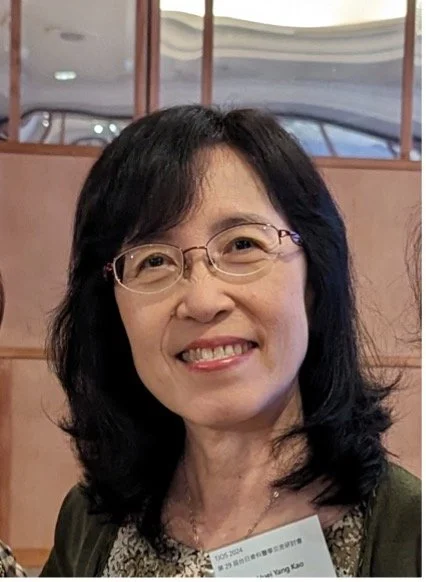
Yea-Huei Kao
Yea-Huei, is now the Professor Emeritus of the School of Pharmacy, and the Institute of Clinical Pharmacy and Pharmaceutical Sciences, National Cheng Kung University (NCKU), Taiwan, after retiring from Feb 2024. She is one of the leading pioneers in promoting education on clinical pharmacy and pharmacoepidemiology research in Taiwan. She has been actively involved in regulatory affairs by serving as an expert member in various advisory committees in the Ministry of Health and Welfare, Ministry of Examination and Ministry of Education.
Yea-Huei established Taiwan’s first graduate program of clinical pharmacy with Master degree and pharmacoepidemiology program with PhD in NCKU. That has contributed to cultivate pharmacy scientist in Taiwan. Also, she established the Center of Health Outcome Research in NCKU dedicated to promoting the use of population data for real-world evidence. This initiative has subsequently enhanced research capacity and provided crucial insights for regulatory decision in Taiwan.
She has joined the International Society of Pharmacoepidemiology since 1996 and has been awarded the Fellowship since 2012. Additionally, she has served as an Associate Editor for Pharmacoepidemiology and Drug Safety, the official journal of ISPE. She is one of the founding members of the Asia Pharmacoepidemiology Network. She hosted the 4th and 14thAsian Conference for Pharmacoepidemiology in Tainan, Taiwan, in 2009 and 2022, respectively, and the 30th Annual Conference of ISPE in Taipei in 2014.
Professor Emeritus of the School of Pharmacy, and the Institute of Clinical Pharmacy and Pharmaceutical Sciences, National Cheng Kung UniversityTaiwan
CRITICS (Panel Discussion)
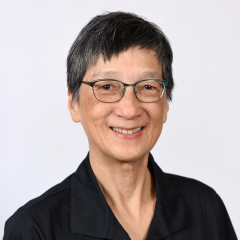
Olivia Liu Sheng
W. P. Carey Distinguished Chair and Professor
Arizona State University
USA
Olivia Sheng is a W.P. Carey Distinguished Chair and Professor of Information Systems in the W.P. Carey School of Business, Arizona State University (ASU). In her role as a Co-director for ASU’s AI and Data Analytics (AIDA) Center (aka the Mindful AI Center), she helps develop transdisciplinary collaborations and multi-institutional partnerships on mindful development and uses of AI and data.
Previously, she was a Presidential Professor and the Emma Eccles Jones Presidential Chair of Information Systems at the David Eccles School of Business, University of Utah. She was an inaugural faculty co-director for the Data Science & Ethics of Technology (DATASET) Initiative of the One Utah Data Science Hub. She founded the Global Knowledge Management Center (2003 - 2023) to seek research and education extension of business analytics and organized one of the first academic conferences on business analytics (2005 - 2019). From 1985 to 2002, she was on the faculty of Management Information Systems (MIS) at the University of Arizona and was the University of Arizona’s MIS Department Head from 1997 to 2002.
Dr. Sheng’s research focuses on methods and applications of predictive and prescriptive analytics, some based on large language models (LLMs), deep learning methods and decision modeling, to address the needs in healthcare, marketing, social media, business relationship and performance, human resource, investment, products and operations management. Her research has received funding from the U.S. Food and Drug Administration, National Science Foundation, Overstock, Yahoo!, U.S. Army, IBM Tivoli, Toshiba Corp., Sun Microsystems, SAP University Alliance, and Wasatch Advisors. Dr. Sheng’s partnerships with these enterprises led to real world applications of AI and data analytics.
Along with her collaborators, she was a recipient of the 2017 INFORMS Design Science Award. Dr. Sheng became one of the INFORMS Information Systems Society (ISS) Distinguished Fellows in 2021 and one of the INFORMS ISS President’s Service Awardees in 2024. Dr. Sheng was the President of the INFORMS Information Systems Society (ISS) from 2021 to 2023. She has served many meetings and award events, as well as journals in the global academic community. She has been an Advisory Editor for Information Systems Research since 2026. She was an Senior Editor for Information Systems Research (2017-2025), a Senior Editor for INFORMS Journal on Data Science (August 2021 through 2024), and a co-Department Editor for the Big Data Analytics Department of Service Science, an INFORMS journal between November 2020 and October 2023. She was an advisor for the McCude AI IS Curriculum Project funded by AACSB and supported by AIS 2020-2022.
Dr. Sheng received a B.S. degree from the National Chiao Tung University (currently, National Yang Ming Chiao Tung University) in Taiwan, R.O.C. and the Master’s and Ph.D. Degrees in Computers and Information Systems from the University of Rochester.